Mature Women Dating in 2026:
Better Conversations and Meaningful Connections
There’s a quiet revolution happening in online dating, and it doesn’t involve swipe-happy twenty-somethings. It’s happening among mature women – women over 50, over 60, over 70 – who have decided that the old rules of digital romance no longer serve them, and who are showing up to the dating world on their own terms.
By 2026, the world of mature women dating has shifted in ways that would have seemed radical just five years ago. The pandemic years reshuffled social life entirely, and many women who found themselves single later in life discovered that traditional venues – dinner parties, alumni events, church groups – simply weren’t producing the kinds of connections they were looking for. Dating apps, once dismissed as tools for the young and reckless, quietly became a legitimate part of social life of mature seniors. According to the 2025 AARP survey of 300 adults aged 50 and older, around half had used a dating site within the past three years – a figure that would have been unimaginable a decade ago.
But using an app and actually enjoying the experience are two very different things. Research from the Pew Research Center found that women aged 50 and older are more likely than their male counterparts to describe their online dating experiences as negative – 57% versus 38%. That gap matters. It tells us that the existing online dating tools weren't built with mature women in mind. The noise, the superficiality, the algorithm-chasing – none of it lines up with what women in this stage of life are actually looking for.
That’s where newer, conversation-first platforms like Sequel dating app come in. Built around the idea that real compatibility reveals itself through dialogue – not photos – Sequel is designed to give mature women the space to date on their own terms: with intention, clarity, and genuine human warmth.
Mature Women Dating in 2026: What Do Conversations Need Now?
Ask any mature single woman over 50 what she wants from online dating, and you’ll get an answer that sounds nothing like a profile bio. She wants someone who listens. She wants to feel seen. She wants to know early on whether this person shares her core values – not just her taste in restaurants.
This is the defining shift in mature women dating in 2026: the conversation has moved to the center of the experience. Women over 40 and over 50 are no longer willing to wade through weeks of shallow small talk before discovering that a match has entirely different ideas about what commitment, family, or lifestyle look like. They want clarity faster – not because they’re impatient, but because they’ve earned the right to be intentional.
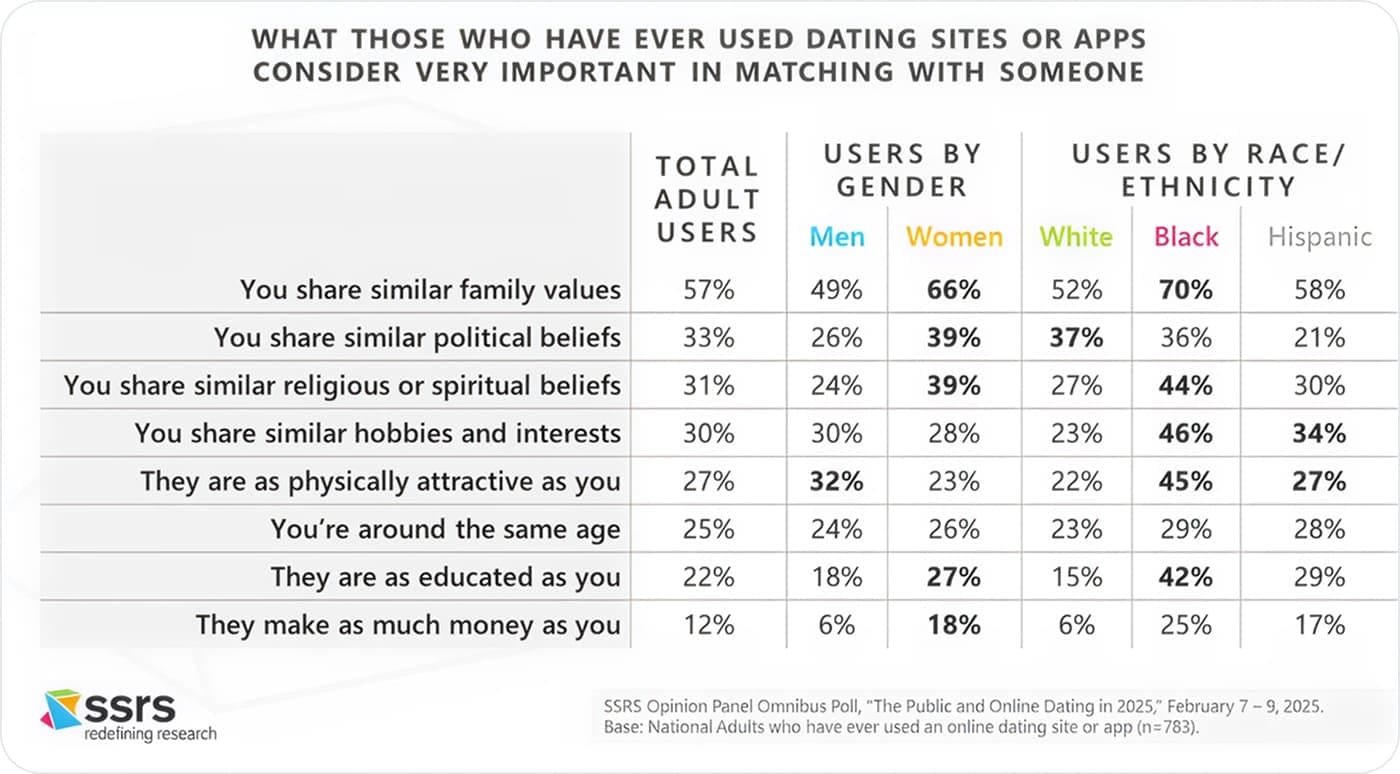
That intentionality is reshaping what good digital communication looks like for this demographic. Rather than leading with physical attraction (though chemistry still matters), mature single women dating online tend to prioritize emotional maturity, shared values, and communication style as their earliest filters. According to the 2025 SSRS survey, about two-thirds of women (66%) cite sharing family values as very important when matching online. Women are also significantly more likely to prioritize shared political and spiritual values.
The conventional dating app model – show your face, write three lines about yourself, wait to be swiped – is increasingly incompatible with these priorities. It reduces human beings to thumbnails and forces women to project warmth and depth into a fundamentally flat format.
Personal mature women dating is becoming more conversation-first for a simple reason: conversation is where maturity shows up. You can fake a photo. You can’t easily fake how you handle disagreement, how you talk about your past, or how you respond to someone else’s vulnerability. The best dating experiences for women over 50 and 60 start not with attraction, but with curiosity – a genuine desire to understand who the other person is, beneath the résumé of their dating profile.
What Are Respectful Questions to Ask Early On?
Early conversations in mature women dating carry more weight than many people realize. They set the tone for everything that follows – and they reveal, often more quickly than we expect, whether two people are genuinely aligned. But there’s a real art to asking the right questions: being curious without being invasive, interested without being interrogative.
The best early questions are open-ended, values-adjacent, and low-stakes. They invite someone to share something real without requiring them to confess their deepest wounds in the first week. Here are some examples of questions that tend to work well:
On values and lifestyle:
- “What does a genuinely good weekend look like for you right now?”
- “Is there something you’ve started doing in the last few years that’s become really important to you?”
- “How do you like to handle conflict when it comes up – do you tend to work through things in the moment or do you need time to process?”
On intentions and what they’re looking for:
- “What brought you to this dating app for 50+ singles – are you open about what you’re hoping to find?”
- “Do you have a sense of what you want your life to look like five years from now?”
On communication style:
- “Are you more of a phone-call person or do you prefer texting? I ask because I find it easier to connect when communication styles actually match.”
These questions feel natural because they are from real life. They’re the kinds of things you’d talk about on a genuinely good first date – curious, warm, forward-leaning.
Contrast that with questions that, even if well-intentioned, can feel rushed or intrusive early on: asking about income, living arrangements, previous divorces, or why past relationships ended. These topics aren’t off-limits forever, but raising them before trust is established can feel transactional or even aggressive. A good rule of thumb for dating women over 50: if you wouldn’t ask it of a new acquaintance at a dinner party, it’s probably too soon.
Respectful curiosity sounds like:
“Tell me more about that.”
Inappropriate rushing sounds like:
“So are you looking to get married again or not?”
The first opens a door. The second slams one shut.
How Do You Communicate Boundaries Without Sounding Harsh?
Boundaries get a bad reputation in dating conversations. They’re often framed as walls – something defensive, something that signals damage. But for mature women over 50, boundaries are simply a form of self-knowledge expressed out loud. They’re not about keeping people away. They’re about inviting the right people in.
The key to communicating boundaries gracefully is to frame them as information rather than ultimatums. You’re not making demands. You’re letting someone know who you are.
Emotional Boundaries
Many women over 50 have been through significant life transitions – divorce, loss, grown children leaving home, career pivots. They may need a slower emotional pace than someone who’s been dating casually for years. Rather than saying “I don’t want to get too intense too fast,” try: “I find I connect more deeply when things develop at a natural pace. I hope that works for you too.” That’s the same message, but it invites a conversation rather than closing one down.
Time and Communication Boundaries
Being clear about your availability is a sign of respect, not rejection. “I tend to respond to messages in the evenings – I’m pretty focused on work during the day, so please don’t read anything into a slow reply” is both honest and warm. Similarly, “I usually like to meet in person within a few weeks of chatting – I find it easier to get a real sense of connection that way” communicates a preference without pressuring anyone.
Financial and Personal Safety Boundaries
This is where single mature women over 50 dating online need to be particularly confident. It is completely appropriate – in fact, it is wise – to set a firm personal rule about never sending money to anyone you've met online, regardless of circumstances. You don't need to announce this at the start of every conversation, but if the topic comes up, you can say clearly: "I have a personal policy about keeping finances completely separate from anyone I meet online until we have an established in-person relationship. It's not personal – it's just important to me." No apology required.
The underlying mindset shift here is one from defensiveness to confidence. Women who have lived full lives, built careers, raised families, navigated losses – they have earned the right to know what they want. Communicating that clearly is an act of self-respect, not aggression.
How Does Sequel Dating App Work for Messaging?
Sequel dating app was built specifically for the 50+ collective – and the messaging experience reflects that in a few meaningful ways that differ from generic dating apps for senior single women.
The most significant difference starts before any message is sent. When users create their Sequel profile, they select their relationship intention upfront: marriage, long-term relationship, companionship, friendship, or exploration. That single step removes one of the most common friction points for a mature woman dating online – arriving at a conversation only to discover the other person’s expectations are entirely different from yours. By the time a conversation starts at Sequel dating site, both people already know they’re in the same chapter.
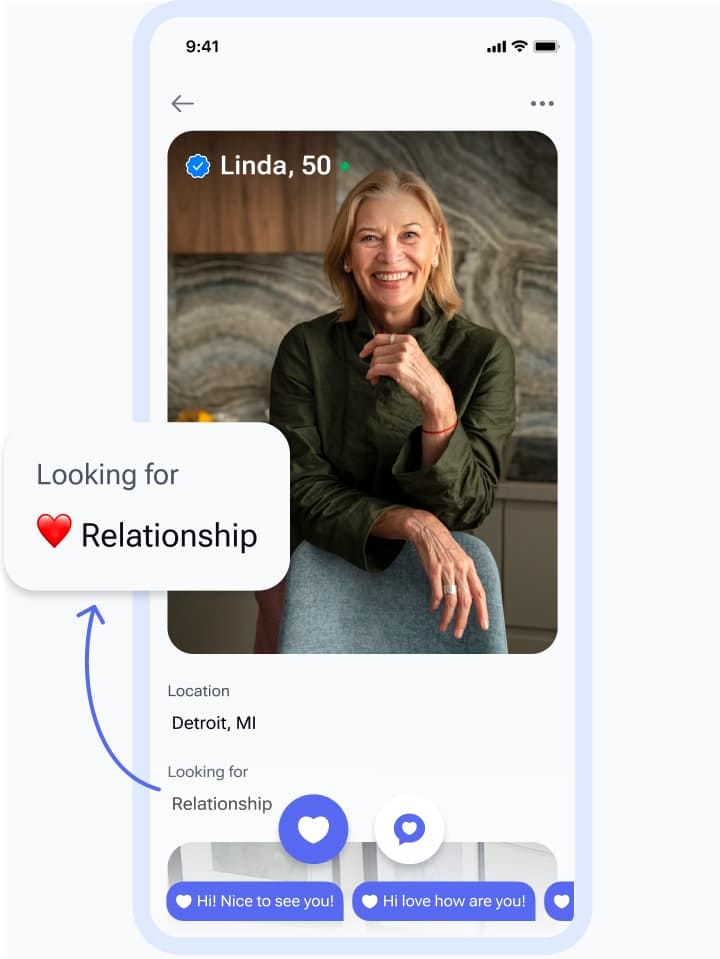
Profiles on Sequel also include a “Little Joys” section – personal details like a favorite film era, a particular travel destination, or a weekend ritual. These small specifics do a lot of conversational work. Instead of opening with “tell me about yourself” and getting a rehearsed answer, you can ask: “I saw that you love classic films – what’s a movie that genuinely changed how you see something?” That’s a real conversation opener.
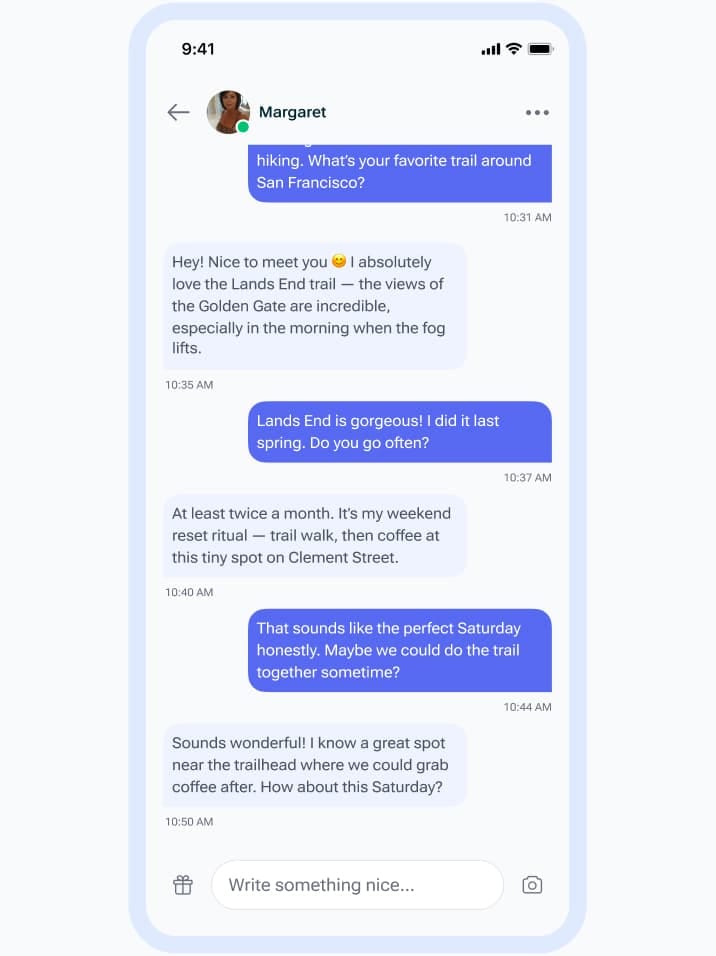
The discovery engine uses over ten customizable parameters – education, values, lifestyle, interests, relationship goals — which means the matches that show up in your feed are meaningfully filtered before you’ve typed a single word. This is what dating for women over 50 should look like: less noise, more signal.
Is Sequel Dating Safe for Single Women Over 50?
This is a fair question, and it deserves a direct answer rather than a marketing one. Is Sequel legit? Yes. Is Sequel safe? As safe as any online space can be when it’s designed with safety as a structural priority rather than a feature checkbox.
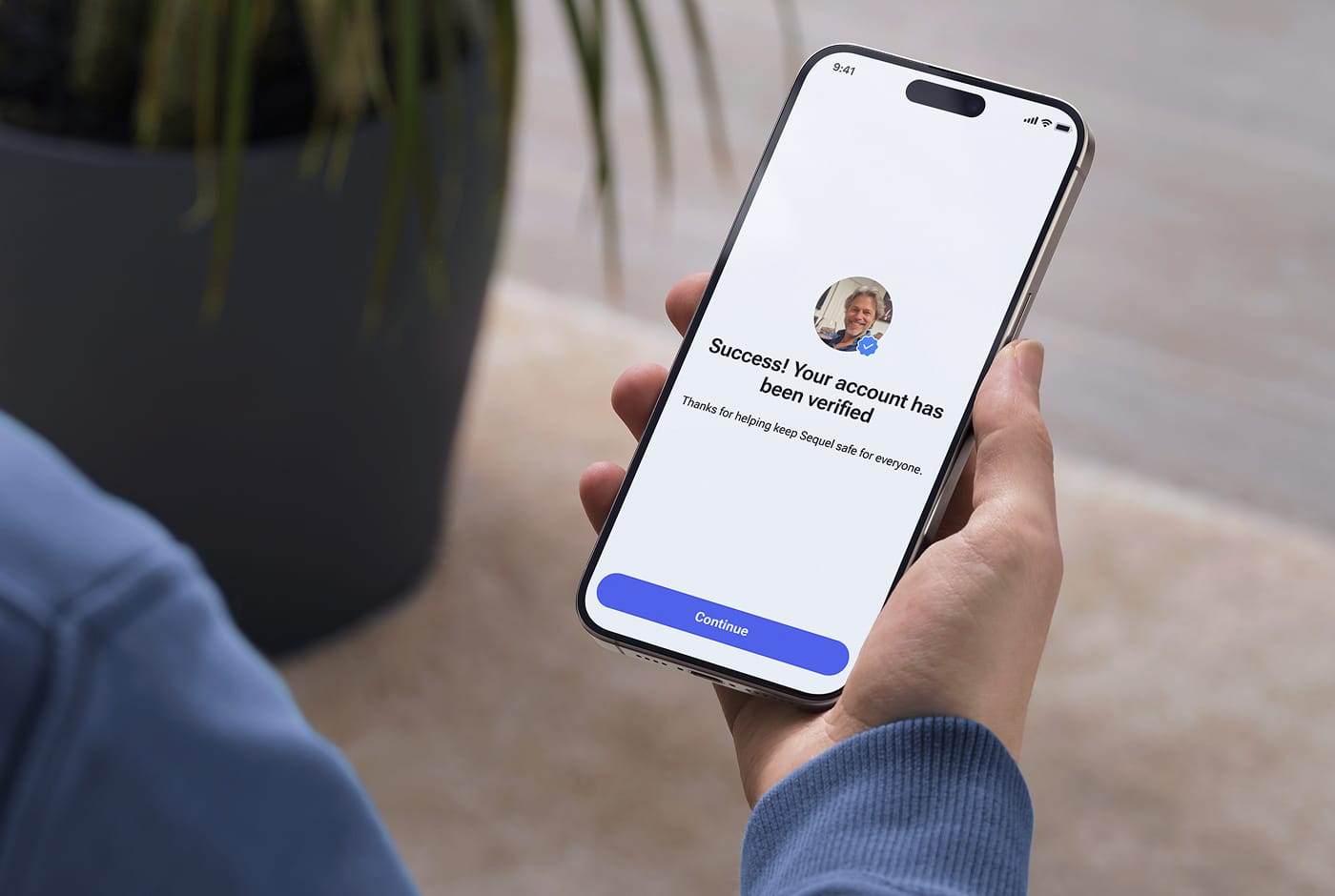
Here’s what’s actually in place. Every profile on Sequel dating app goes through dual-layer verification: first an AI scan for synthetic content and inconsistent information, then a review by a human moderator if required.
The anti-fraud engine runs in real time, cross-referencing registration data against known fraud patterns. Profiles are only visible to registered members – you can’t stumble across someone’s Sequel profile through a search engine link, which protects both privacy and exposure. All data is encrypted through TLS 1.2 and 1.3 protocols.
There is also an in-app reporting system that’s given high priority in Sequel’s moderation workflow. If something feels wrong in a conversation – pressure tactics, unusual requests, inconsistent details — users can flag it immediately, and it goes to a dedicated moderation specialist for review.
For women over 50 dating online, one specific concern matters above others: romance scams. Research and industry reports consistently show that romance scams occur across dating platforms with weaker verification and moderation controls. Safe dating sites for women over 50 need to take this seriously structurally, not just in their terms of service.
One important caveat: no platform, however well-designed, can guarantee that every person behind a profile is entirely who they say they are. Sequel as a curated dating app reduces that risk significantly. But using any dating site for mature women requires informed participation – which the next section covers directly.
How to Avoid a Romance Scam?
Romance scams are, by any reasonable measure, one of the most devastating forms of fraud targeting mature women today. According to the FTC, in just the first nine months of 2025, consumers reported losing over $1.16 billion to romance scams – and the numbers are rising, up 22% compared to the same period in 2024. Older adults were specifically identified as disproportionately affected.
The patterns are remarkably consistent, which makes them recognizable – if you know what to look for.
Fast emotional escalation is the first and most reliable red flag. A scammer will express deep feelings unusually quickly. Within days or weeks, they may be using the language of soulmates, destiny, and love – not because they feel it, but because emotional investment makes people easier to manipulate. A genuine connection builds gradually. If someone is declaring profound feelings before you’ve even spoken by phone, slow down.
The inability to meet senior women in person is the second red flag. Scammers almost always have a reason they can’t video chat clearly, can’t meet locally, or are perpetually “abroad.” Common fabricated identities include military personnel stationed overseas, doctors with international aid organizations, or engineers on offshore oil rigs. These are stories designed to explain absence. Real people find a way to show up.
Financial requests, however they’re framed, are the clearest danger signal of all. The FTC warns: never send money to someone you’ve only met online. The amount doesn’t matter. The reason doesn’t matter. The urgency of the story doesn’t matter. Scammers most commonly request money via wire transfer, gift cards, or cryptocurrency – all forms of payment that are nearly impossible to reverse.
Off-platform pressure – being asked to move conversations to WhatsApp, Telegram, or another private messaging service very early – is another common signal. This is a frequent move by scammers, who want to operate outside the moderation and record-keeping of the original dating platform for seniors.
Practical protective habits for senior women dating online include:
- reverse image-searching profile photos (scammers often use stolen images)
- telling a trusted friend or family member about new online connections
- never sharing your home address or workplace early in a relationship, and
- always meeting for the first time in public places.
Trust your instincts. Women often describe knowing something was “off” before they could articulate exactly why. That instinct is not paranoia – it’s a pattern recognition built from lived experience. Honor it.